

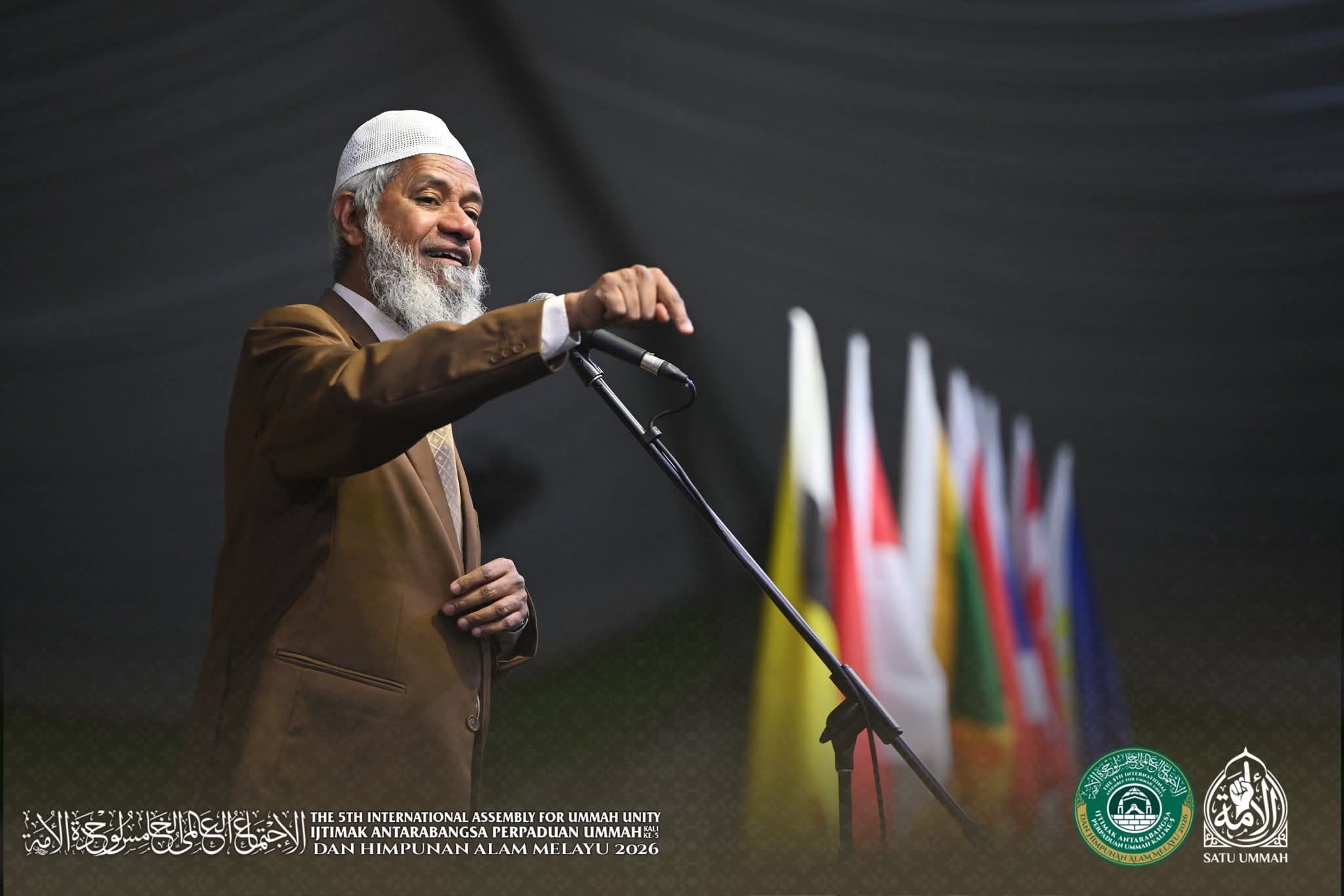
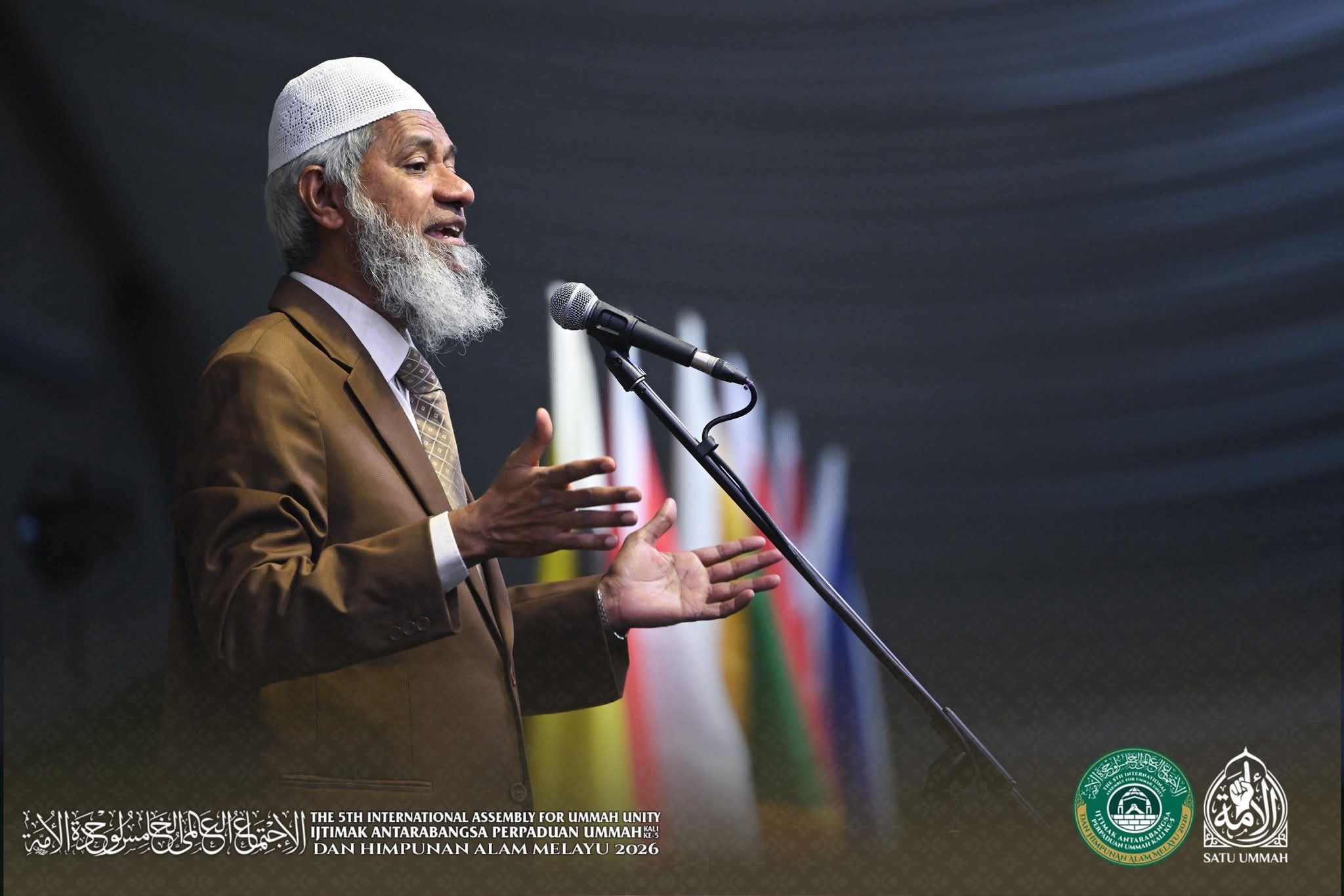
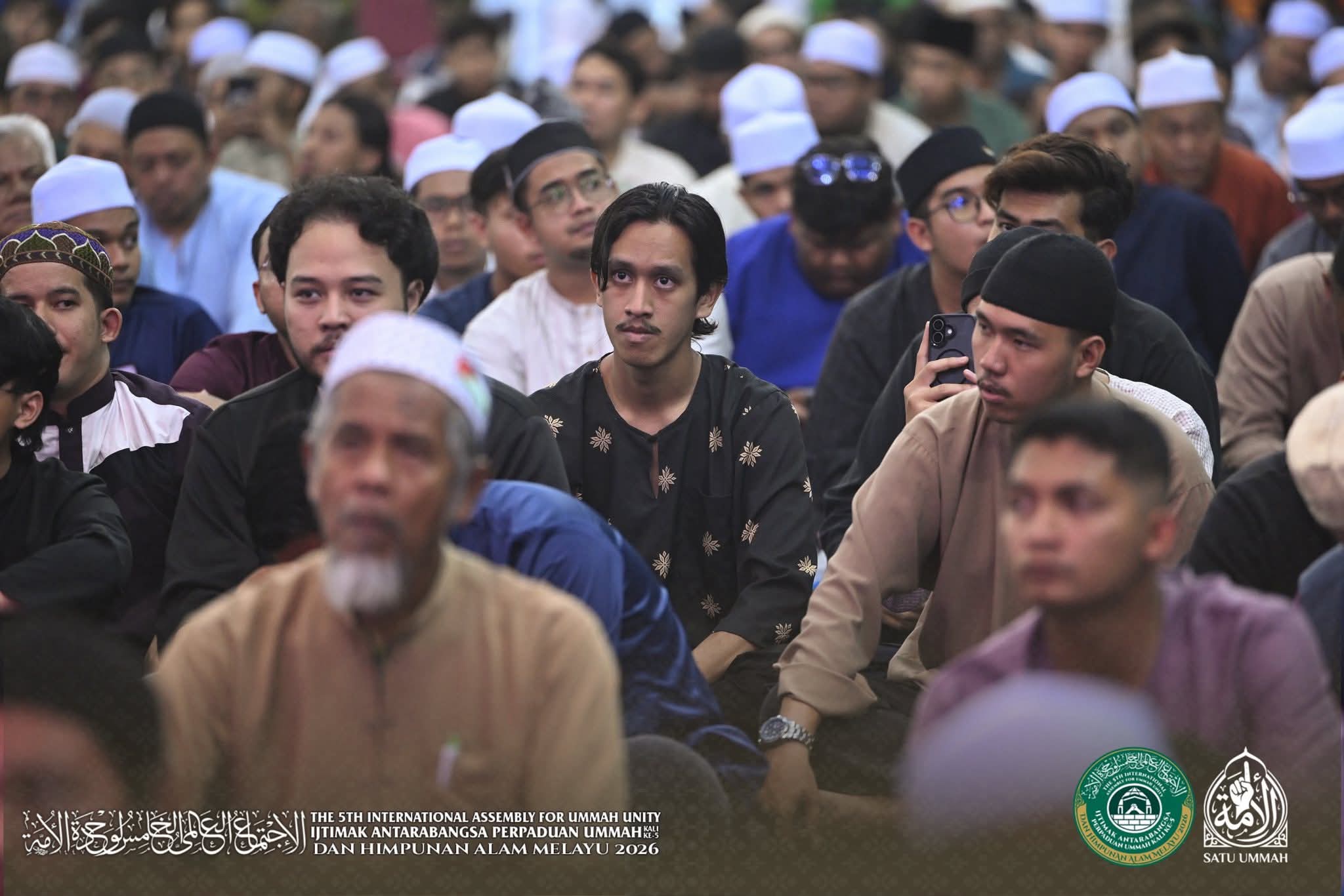
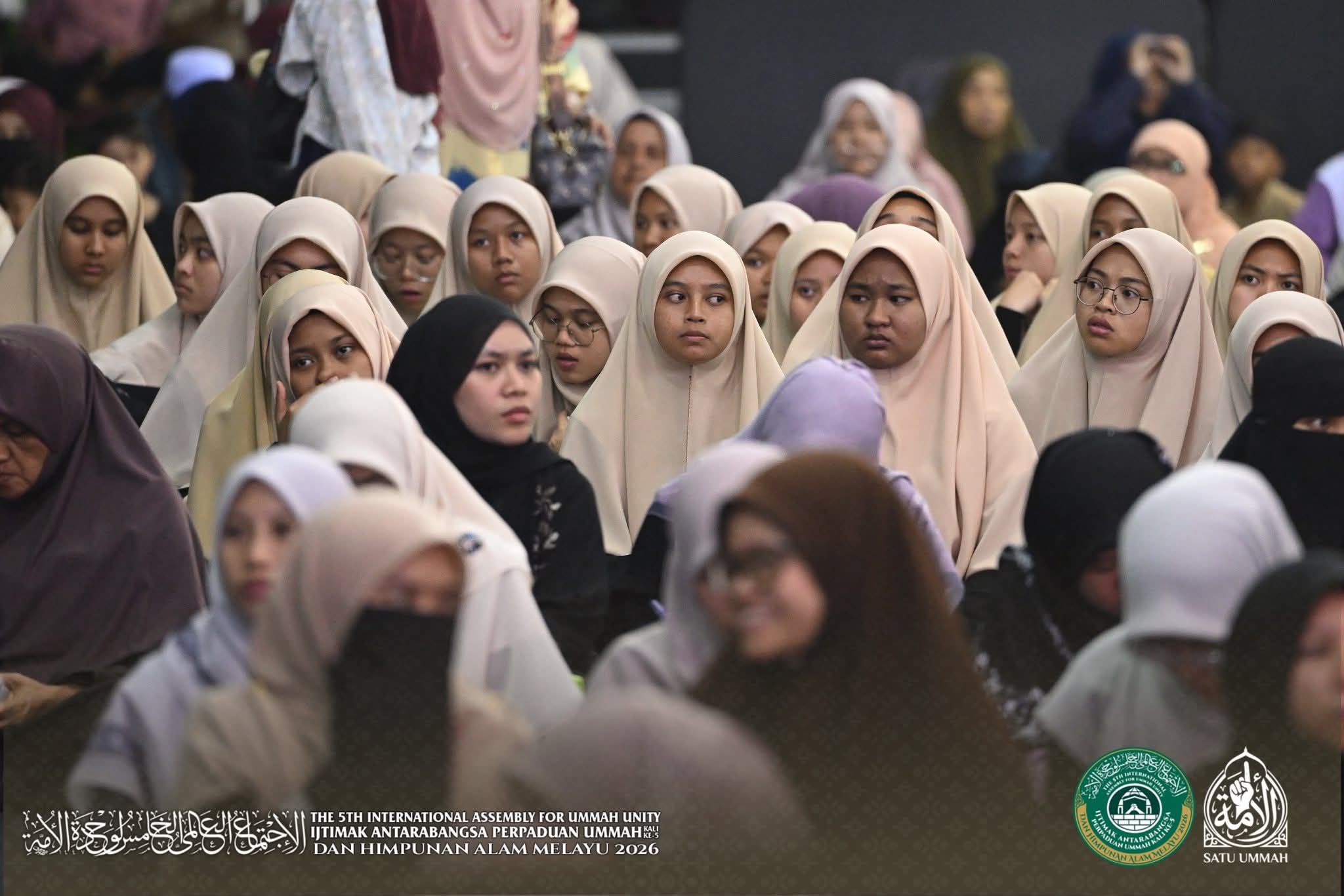
KUALA TERENGGANU, 4 April - Addressing a massive crowd at the 5th International Assembly of United Muslim Ummah and Malay World Gathering 2026, Prof. Dr. Zakir Naik highlighted the untapped potential of Malaysia’s Indian Muslim population as a primary bridge for interfaith outreach.
During his keynote address, titled 'The Role of Indian Muslims in Dakwah in the Malay World', Dr. Zakir pointed out a significant discrepancy between official records and the actual demographic reality of the community.
By citing data that includes Tamil Muslims registered as Bumiputra and multi-generational families integrated into the local culture, he concluded the real numbers are far more substantial.
"I have already mentioned everybody the topic, the Indian Muslims in Malaysia. When you Google you will say there are only about a couple of 100000 but that is what is mentioned in the IC.
"But if you ask the AI you get reply that there's a large number of Tamil Muslims who are Malaysians but they register as bumiputra. They are more than 1 million. Some say 1.1 million some say 1.2 million.
"And the third type are those who are married to Malaysian and the third, fourth generation - all put together - the Muslims of Indian origin in Malaysia would be one 1.5 million to 2 million, that is about 4 to 5% of the Malaysian population," Dr. Zakir stated.
He explained the logic behind this demographic bridge, stating, it is but natural that if the people of same kind do dawah to the same kind or same race of non-Muslims, the acceptability is better.
Dr. Zakir emphasized that dawah is not merely an optional activity but a religious obligation for all. Quoting Surah Al-Asr, he reminded the audience that according to the Quran, inviting people to the truth is one of the four essential criteria for salvation.
"You may be a very good Muslim but if you don't do dawa you shall not enter Jannah," he cautioned, underscoring the urgency of the mission.
The speech concluded with a call to action for the Indian Muslim community to embrace their role as a 'master key' for peace and understanding in Malaysia
The foundation of this strategy is derived from the Quran in Surah Al Imran (3:64), which commands: "People of the book, come to common terms as between us and you," Dr. Zakir explained as he quoted the Surah.
"If out of these 10 points, five points are common, let us agree to follow these five points. The (differences) we can discuss tomorrow," he said which after, emphasized that by looking at the authentic scriptures of various faiths including the Bible and the Hindu Vedas, one finds a shared cornerstone of belief.
According to Dr. Zakir’s analysis, the authentic scriptures of major world religions such as Hinduism, Christianity, and Islam all emphasize the Oneness of God and explicitly state that He has no images.
He further asserts that the arrival of Prophet Muhammad as the final messenger is a shared prophetic foretelling found within the Bible, the Vedas, and the Upanishads.
This commonality extends to physical acts of worship, where Dr. Zakir points out that ancient scriptures describe prophets who fell on their face to pray, a practice mirrored in the Muslim 'sujud' and the Hindu 'namaskar'.
Finally, he highlights that fundamental moral standards, including the prohibitions against consuming alcohol and pork as well as the requirement for modest dress or hijab, are consistently present across these diverse religious traditions.
Dr. Zakir stressed that the goal of using this master key is to win hearts through logic and respect.
"The Quran says reply back with something better. Don't reply evil with evil. If they evil with you, you reply with something better.
"So the rule here is when you are speaking with non-muslims, don't try and defeat them. Try and win them over we as daies, it is not a boxing match. We should not defeat the non-muslims, we should win them over. So this is the golden rule of dakwah," he added.
He shared anecdotes of non-Muslims in India who, after hearing the scriptural commonalities, claimed they learned more about their own religion in two hours than they had in 40 years.
The address concluded with a call for the Muslim community to study these scriptures to better serve as ambassadors of peace.
"If you can master the answers to these, you may not be able to convince all, but most of them you can convince," Dr. Zakir said.

Artikel Berkaitan